Introduction to Genetics: Understanding Heredity
Key Question — How are parents' traits passed on to their children?
How are parents' traits passed on to their children?
- Understand what genetics is and why it is important.
- Identify the concepts of DNA, gene, and chromosome.
- Learn how hereditary traits are passed on during reproduction.
- Distinguish (at a simple level) between dominant and recessive traits.
Part 1: What is Genetics?
Genetics is the science that studies the transmission of hereditary traits, which are characteristics we receive from our parents.
These traits can involve visible features (eye color, hair shape) or less visible aspects (blood types, certain genetic diseases).
A hereditary trait is a characteristic linked to information contained in cells and passed from one generation to the next.
- Genetics explains how traits can be transmitted from parents to children.
Part 2: Basic Elements of Genetics
DNA
DNA is a large molecule that contains genetic information. It carries instructions used by the cell, mainly to make proteins.
Genes
A gene is a small portion of DNA that contains information related to a trait (for example, the production of a protein).
Chromosomes
Chromosomes are structures found in the cell nucleus; they are "packages" of DNA. They carry many genes.
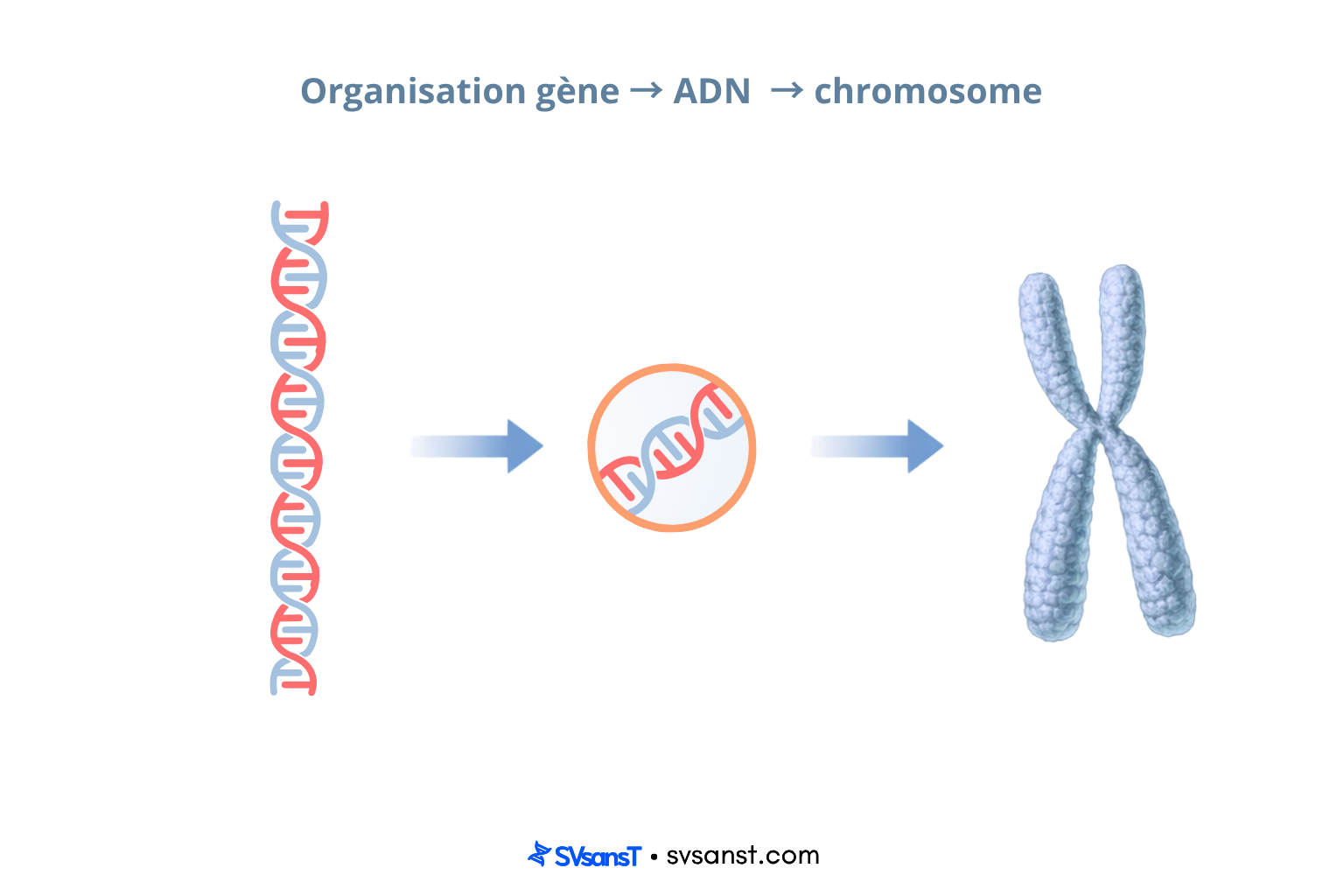
| Element | Role | Location |
|---|---|---|
| DNA | Carrier of genetic information | In the nucleus (in chromosomes) |
| Genes | Portions of DNA linked to traits | On the DNA, therefore on chromosomes |
| Chromosomes | Structures that group DNA and carry many genes | Cell nucleus |
- DNA carries genetic information.
- Genes are portions of DNA.
- Chromosomes are structures containing DNA in the nucleus.
Part 3: Transmission of Hereditary Traits
During reproduction, the child receives genetic information from both parents.
In humans, the child receives half of their chromosomes from the mother (in the egg cell) and the other half from the father (in the sperm cell).
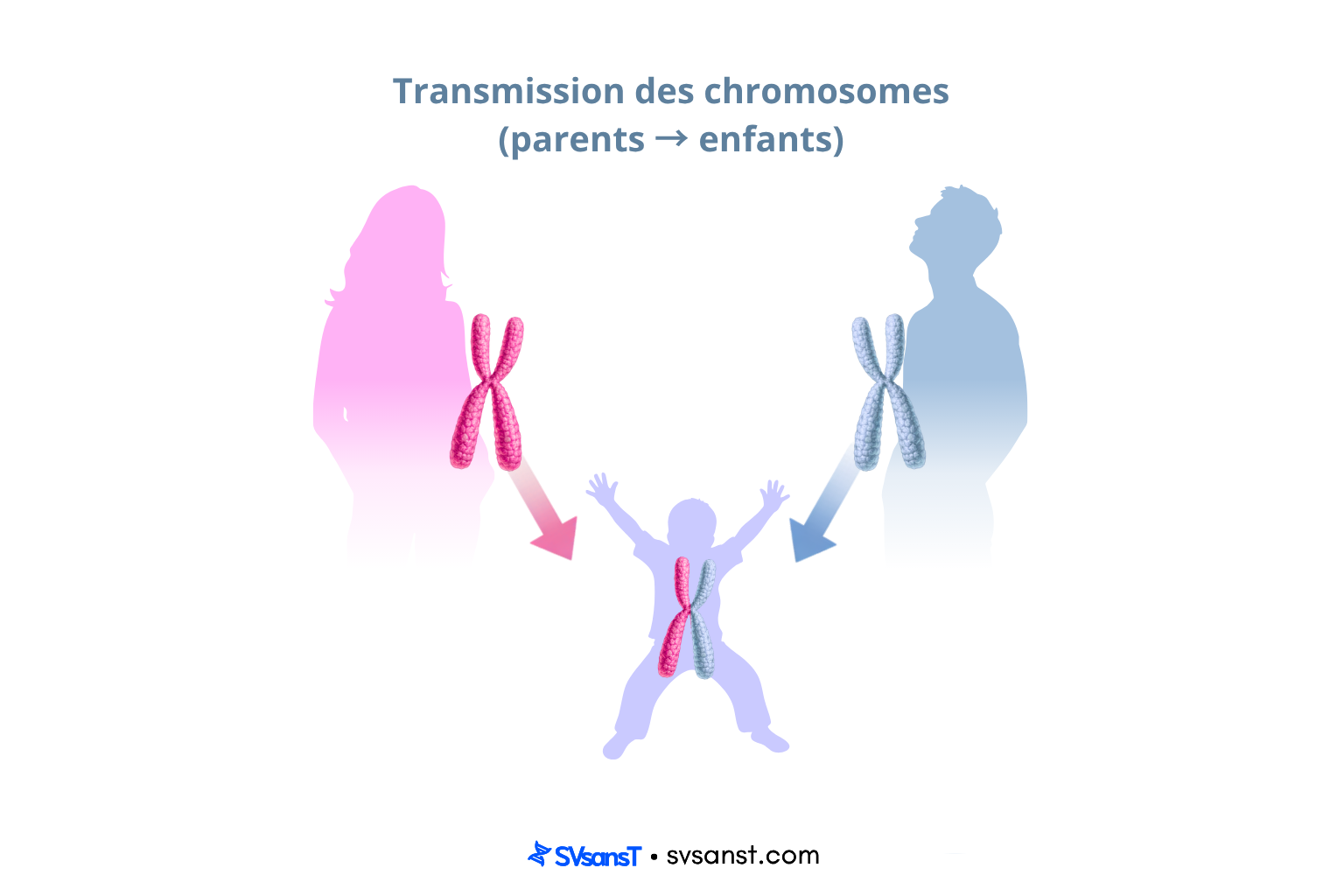
For many genes, we have two versions: one inherited from the mother and one from the father. These versions are called alleles.
- Allele: a version of a gene.
- Dominant: a dominant allele is expressed if the individual has at least one.
- Recessive: a recessive allele is expressed only if the individual has two copies.
| Concept | Explanation |
|---|---|
| Dominant | Expressed in the presence of at least one dominant allele |
| Recessive | Expressed only if both alleles are recessive |
- Hereditary traits are transmitted by genetic information carried by chromosomes.
- We receive part of this information from each parent through gametes.
- Dominant and recessive describe how some alleles are expressed.
Genetics studies how traits are passed from parents to children. DNA carries genetic information: genes are portions of DNA organized on chromosomes. During reproduction, the child inherits part of their chromosomes from each parent (via the egg and sperm cells). Alleles can be expressed differently: some are dominant, others recessive.